
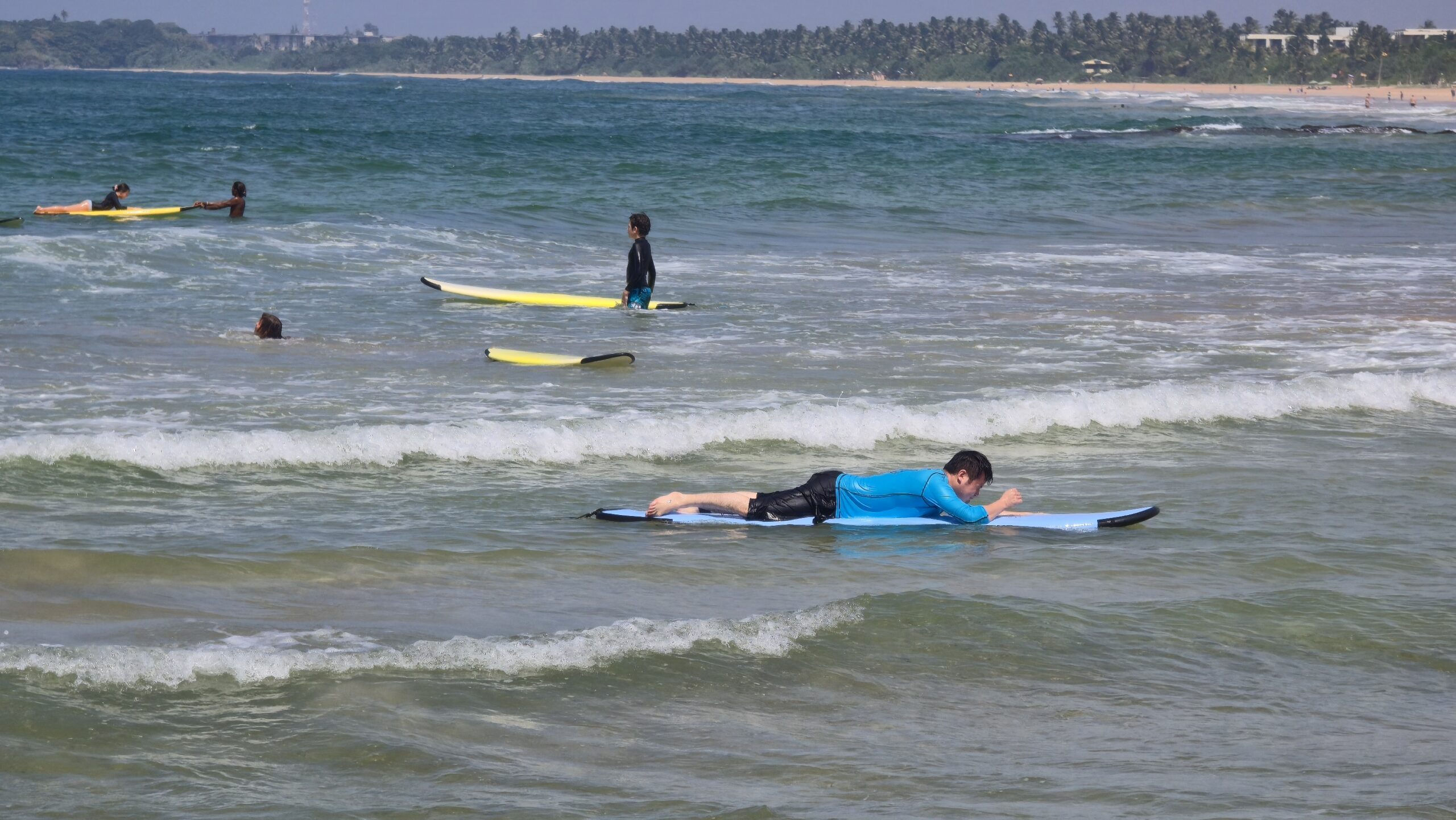
Info on Learning to Surf in Sri Lanka
Sri Lanka has become one of the world’s most inviting surf destinations, offering warm waters, consistent waves, and a welcoming surf culture.

Whilst Sri Lanka has many years of Surfing experience with ease of world travel, more surfers are coming to Sri Lanka to enjoy the environment, the beaches and the social culture.
Whether you’re a complete beginner or progressing toward intermediate skills, the island’s beaches, particularly Bentota, Weligama, and Mirissa provide the perfect setting to learn.
Local surf instructors are known for their friendliness, patience, and deep expertise, making the journey from novice to confident surfer both safe and enjoyable.

Why Sri Lanka is Perfect for Surf Beginners
– Gentle waves: Sandy-bottom breaks at Weligama and Bentota are forgiving, ideal for first attempts.
– Warm climate: Year-round tropical weather means no wetsuits are needed.
– Surf schools everywhere: Certified instructors offer structured lessons, often in small groups or one-on-one.
– Hospitality: Sri Lankan surf culture emphasizes encouragement, safety, and fun.

Popular Sri Lanka Surfing Spots
Here is a run down of the popular places to learn to surf in Sri Lanka

Bentota Beach
Ideal for beginners – Calm, scenic wide sandy beach, gentle waves, perfect for first pop-ups
Weligama Bay
Ideal for beginners to intermediates. Bustling surf hub. Numerous surf schools, consistent waves, sandy bottom
Mirissa
Intermediate learners. Vibrant, social Slightly stronger waves, great for progressing skills
Bentota Beach stands out as the ideal beginner’s beach, its mellow waves and spacious shoreline allow learners to practice without crowding. Weligama, meanwhile, is Sri Lanka’s surf capital, buzzing with busy schools and surf culture. Mirissa offers a step up, with slightly more challenging waves for those ready to progress.

Madiha Surf Point is for experienced intermediate and advanced surfers, only. Whilst the surf break, is great the reef and rocky shore are not for beginners.
The Role of Local Surf Instructors
Sri Lankan surf instructors are often ISA-certified and bring years of experience. Their teaching style blends:
– Friendliness: They make lessons fun and approachable.
– Expertise: Step-by-step guidance on paddling, balance, and safety.
– Encouragement: Helping beginners overcome fear and celebrate small victories.
– Local knowledge: Understanding tides, currents, and the safest times to surf.
Many visitors remark that instructors in Weligama and Bentota feel more like friends than teachers, creating a supportive environment that builds confidence quickly.

Steps for Surfing Beginners
1. First Session – Getting Comfortable
– Learn about ocean safety and surf etiquette.
– Practice lying on the board, paddling, and balancing.
– Dry-land drills: “pop-up” technique (moving from lying to standing).
2. Catching Whitewater Waves
– Start with small broken waves near shore.
– Focus on timing the pop-up and maintaining balance.
– Build confidence by riding short distances.
3. Progressing to Green Waves
– Paddle out slightly further.
– Learn to angle the board and ride unbroken waves.
– Practice turning and controlling speed.
4. Advanced Beginner Skills
– Improve paddling endurance.
– Learn to read wave sets and position correctly.
– Begin practicing small maneuvers like trimming along the wave face.
Physical Preparation Before Arriving in Sri Lanka
Surfing demands strength, balance, and endurance. Preparing your body beforehand makes learning smoother.
Best Exercises
1. Core Strength
– Planks, sit-ups, Russian twists.
– Strong core helps with balance on the board.
2. Upper Body
– Push-ups, pull-ups, swimming.
– Builds paddling power and pop-up speed.
3. Legs & Stability
– Squats, lunges, yoga poses.
– Improves stance and balance.
4. Cardio
– Running, cycling, or swimming.
– Boosts stamina for long surf sessions.
By focusing on these areas, you’ll arrive in Sri Lanka ready to paddle longer, pop up faster, and stay balanced more easily.
Surf Clothing & Gear Essentials
– Surfboard & Leash: Provided on loan by most schools, but beginners usually start with soft-top boards.
– Rash Guard or Surf Shirt: Protects from sunburn and board rash.
– Board Shorts or Swimwear: Comfortable and quick-drying.
– Sunscreen: High SPF, water-resistant, reef-safe.
– Surfing Sunglasses: Polarized, with straps to prevent loss.
– Hat or Cap: Optional, but useful for extra sun protection.
– Flip-flops & Beach Towel: For comfort between sessions.
Sri Lanka’s tropical sun is strong, so sun protection is non-negotiable. Rash guards and sunscreen are your best allies.
Tips for Surfing Success
1. Be patient: Progress comes in small steps, celebrate each wave you ride.
2. Listen to instructors: Their local knowledge ensures safety and faster learning.
3. Practice balance daily: Even standing on one leg or using a balance board helps.
4. Stay hydrated: Surfing is physically demanding in the warm weather of Sri Lanka.
5. Respect the ocean: Learn surf etiquette and be mindful of other surfers.
6. Dont cut in front of surfers already on the wave.
7. Respect other surfers, and you will find that they well manner experienced surfers will help you.
Conclusion
Learning to surf in Sri Lanka is more than a sport, it’s an immersion into a warm, welcoming culture.
From the calm waves of Bentota Beach to the lively surf schools of Weligama and the vibrant scene at Mirissa, every step of the journey is supported by friendly local instructors who make the experience safe, fun, and unforgettable.
With some physical preparation, the right gear, and an open spirit, you’ll not only learn to surf, you’ll fall in love with the rhythm of the island’s waves and you will feel the surf vibe.

Leave a Reply
You must be logged in to post a comment.